The Rich Fool - All for Nothing

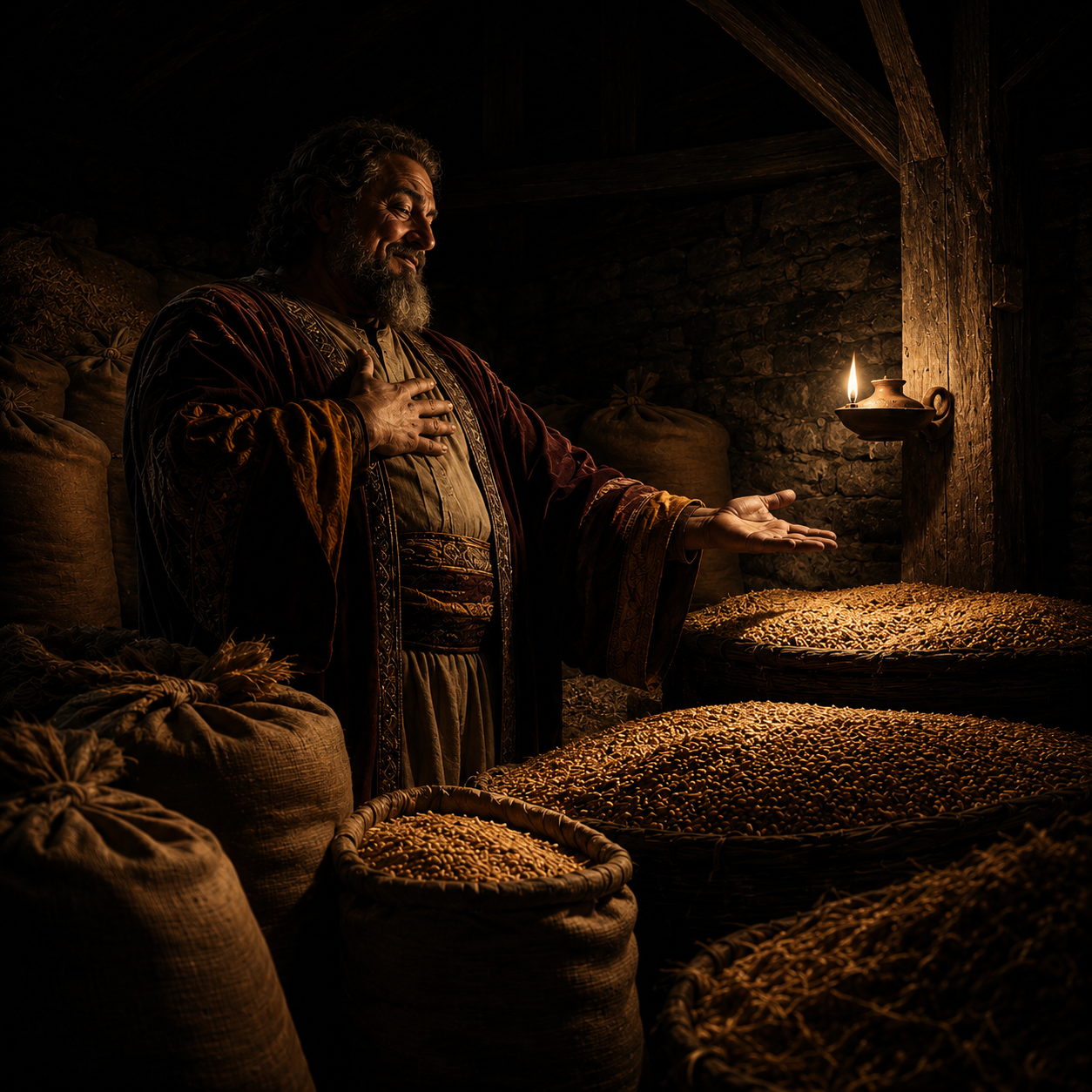


Jesus warns a crowd about covetousness. Then He tells a story where nothing is coveted.
Read it again. No neighbor’s field. No brother’s portion. Nothing stolen. Nothing envied. The rich man deals entirely in what is lawfully his — my fruits, my barns, my goods. If covetousness means wanting what belongs to another man, this parable misses its own point.
It doesn’t. You’ve been carrying the wrong definition.
A man interrupts Jesus mid-sermon: Master, speak to my brother, that he divide the inheritance with me (Luke 12:13). The eternal Judge of all the earth is standing in front of him — and he wants a temporary arbitrator. Jesus refuses the case and posts a guard: Take heed, and beware of covetousness: for a man’s life consisteth not in the abundance of the things which he possesseth (Luke 12:15). Two commands of vigilance stacked on one sin. You post a double sentry against what you won’t see coming.
Then the story. A rich man’s ground produces beyond his barns. He talks it over — with himself. No thanksgiving. No prayer. No neighbor. No thought of death. Just I will, I will, I will — and then a benediction spoken over his own soul: Soul, thou hast much goods laid up for many years; take thine ease, eat, drink, and be merry.
That’s not a business plan. That’s a psalm with God cut out of it.
Look at what he’s actually reaching for. Not more grain — he has a finish line. Rest. Security. Years. A soul at ease. Every item on that list belongs to God to give. Rest for the soul is Christ’s to give. The years are in His hand. The soul itself is His breath, on loan. The rich fool is coveting the Lord’s own portfolio — and trying to capture it in cedar and stone. He built barns to buy what his Father gives for asking.
Then the only voice in any parable that belongs to God Himself: Thou fool, this night thy soul shall be required of thee: then whose shall those things be, which thou hast provided?
This night — against many years. The barns are never even built. He dies between the plan and the construction. The soul he addressed as his dependent turns out to be the collateral — required, demanded back, a loan called in. And the last word over his estate is a question he has no standing to answer: whose?
All of it, for nothing. And all of it for nothing — a security no barn can hold, offered to a god of grain that cannot hear.
This parable is not aimed at misers. It’s aimed at the plan. The hedge. The account balance whispering take thine ease. The man holding that plan doesn’t call it coveting. He calls it prudence. So did the fool.
Don’t take our word for any of this. The Bereans searched the scriptures daily, whether those things were so (Acts 17:11). Open Luke 12. Read the whole passage. Test everything you hear in this episode against the text itself — and answer God’s question while it is still a question and not a verdict.
Episode Link:
https://www.rabbitholesandmeditations.com/the-rich-fool-all-for-nothing/

