Truth or Consequences - The Pharisaic Dilemma


The Puzzle
You are on an island where every inhabitant is either a Knight (who always tells the truth) or a Knave (who always lies). You meet two people, Red and Blue.
Blue says: "We are both knaves."
Question: What are the identities of Red and Blue?
The Solution
- Blue is a Knave.
- Red is a Knight.
The Logic
- Could Blue be a Knight? No. If Blue were a knight, his statement ("We are both knaves") would have to be true. But if he is a knight, he cannot be a knave. This is a contradiction.
- Therefore, Blue must be a Knave. Since Blue is a knave, his statement must be a lie.
- Analyze the lie: The statement "We are both knaves" is false. For this statement to be false, it is not the case that both of them are knaves. Since we already know Blue is a knave, the only way the statement can be false is if the other person, Red, is a Knight.
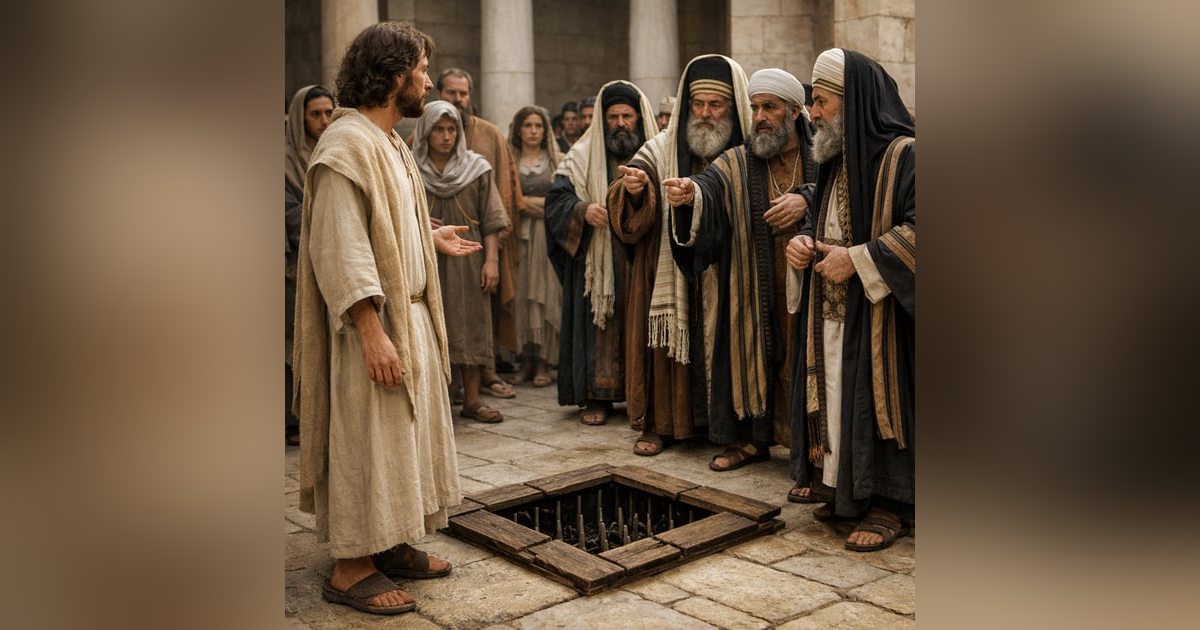
In this Red-Letter journey, from the very beginning, we've seen the confrontation between the religious elite and Jesus. Even John the Baptist referred to them as a brood of vipers.
Yet the religious elite recognized John the Baptist as a prophet. The problem they have to contend with, is once they admit that, their entire world caves in on them.
Like the knights and knaves riddles where knights always tell the truth, knaves always lie. Those riddles were stated in such a way that if you applied appropriate logic to the riddle, you could determine who was the knight and who was the knave. It turns out that if you change the game to Pharisees and Prophets, you can arrive at the similar conclusions. Pharisees always lie; prophets always tell the truth. If you remember that, the entire narrative of the New Testament opens up. No longer will you be screaming at the pharisee in your bible to "wake up, it's right there in front of you!" Why not? because you know that the Pharisee is lying, intentionally!
The religious leaders, it turns out, are like the knaves. When you walk through the logic of the gospels, you discover that they had to know who Jesus was, especially by the time He reaches the temple in passion week but even well before that. There is enough testimony by the time John the Baptist is beheaded to know with absolute surety.
The dilemma one faces when trying to understand the Jewish religious elite is did they honestly just not know? Jesus at one point calls them blind guides. Does that imply ignorance? The uncomfortable conclusion we have to come to is the realization that the religious leaders knew the truth.
Notes to Truth or Consequences
Episode Link:
https://www.rabbitholesandmeditations.com/truth-or-consequences-the-pharisaic-dilemma/

